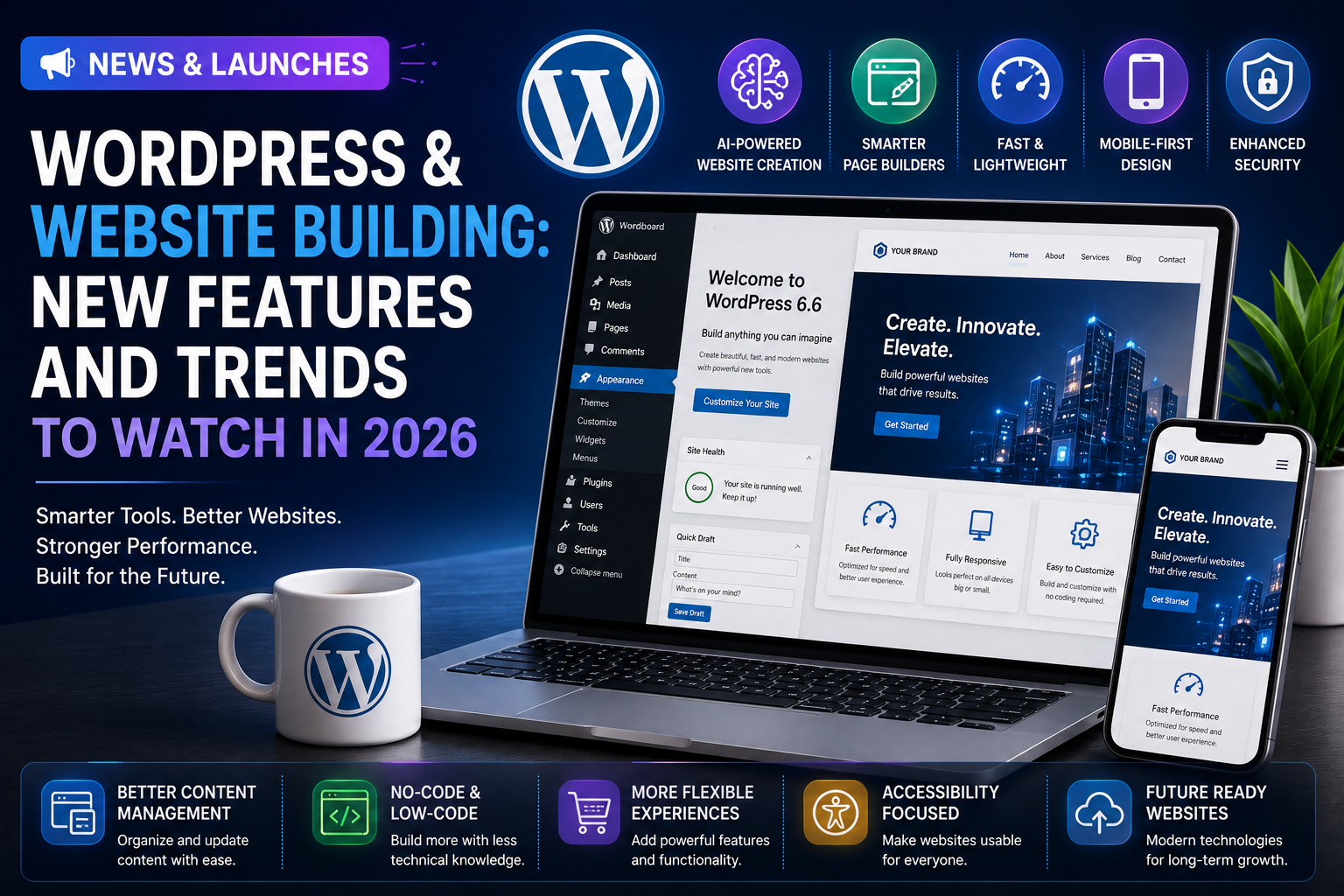
WordPress and Website Building: New Features and Trends to Watch in 2026
Here are some of the important WordPress and website-building trends to watch this year.
1. AI-Powered Website Creation
Artificial Intelligence is becoming an important part of website development.
AI-powered tools can help users generate website content, suggest layouts, create images, write code, and improve existing pages.
This can make the initial website-building process much faster, especially for small businesses and beginners.
2. Smarter Page Builders
Modern page builders are focusing on making website customization easier.
Users can create sections, adjust layouts, change typography, and customize responsive settings without needing to write code for every small change.
AI-assisted features can also help users generate design ideas and content directly inside the website-building workflow.
3. More Focus on Website Performance
Website speed continues to be an important part of modern web development.
Slow websites can create a poor user experience, particularly for visitors using mobile devices.
Website owners are therefore focusing on:
- Image optimization
- Caching
- Lightweight themes
- Optimized code
- Better hosting
- Reduced unnecessary scripts
Performance optimization is becoming a regular part of website maintenance rather than something done only when a website becomes slow.
4. Mobile-First Website Design
Mobile devices continue to play a major role in how people access websites.
Modern websites are increasingly designed with mobile users in mind from the beginning.
This includes responsive layouts, easy-to-use navigation, readable typography, touch-friendly buttons, and optimized images.
A website should provide a smooth experience regardless of whether visitors are using a phone, tablet, or desktop computer.
5. Improved WordPress Security
Website security remains a major priority for website owners.
Keeping WordPress, themes, and plugins updated is important for maintaining a secure website.
Website owners are also paying more attention to strong passwords, secure login systems, backups, SSL certificates, and reliable security tools.
Regular maintenance can help reduce the risk of common website security problems.
6. Better Content Management
Managing website content is becoming easier with modern WordPress tools.
Website owners can create blog posts, update pages, organize media, and manage website sections through increasingly user-friendly interfaces.
For businesses that publish content regularly, an efficient content management workflow can save significant time.
7. Growth of No-Code and Low-Code Development
No-code and low-code tools are making website development more accessible.
Users with limited programming experience can build websites and customize features using visual interfaces.
Developers can also use these tools to speed up repetitive tasks while focusing their coding skills on more complex functionality.
8. More Flexible Website Experiences
Businesses are looking for websites that can do more than simply display information.
Modern websites may include:
- Online booking
- Customer portals
- Interactive forms
- E-commerce features
- Membership systems
- AI chat assistants
- Personalized content
- Real-time notifications
These features can help businesses provide a more complete digital experience to their customers.
9. Accessibility as a Design Priority
Website accessibility is becoming an increasingly important part of digital design.
Developers and designers are working to make websites easier to use for people with different abilities.
Important areas include:
- Clear navigation
- Readable text
- Keyboard accessibility
- Good color contrast
- Alternative text for images
- Accessible forms
An accessible website can provide a better experience for a wider audience.
10. The Future of Website Development
The future of website development is moving toward simpler workflows, smarter tools, faster performance, and more personalized experiences.
AI will continue to assist developers and content creators, while visual website-building tools will make customization easier for beginners.
At the same time, businesses will continue to focus on security, performance, accessibility, and user experience.
What Should Website Owners Do?
Website owners do not need to adopt every new technology immediately.
Instead, focus on improvements that provide real value to your visitors and business.
Start by:
- Keeping WordPress updated
- Improving website speed
- Optimizing mobile design
- Maintaining regular backups
- Improving website security
- Creating useful content
- Monitoring website performance
- Using new tools only when they solve a real problem
Final Thoughts
WordPress and website development are continuing to evolve in 2026. AI-powered tools, smarter page builders, improved performance, mobile-first design, stronger security, and no-code solutions are changing how websites are created and managed.
For businesses and website owners, staying informed about these developments can help them make better technology decisions.
The goal should not be to follow every trend, but to use the right tools and features to create a website that is fast, secure, accessible, easy to manage, and useful for visitors.