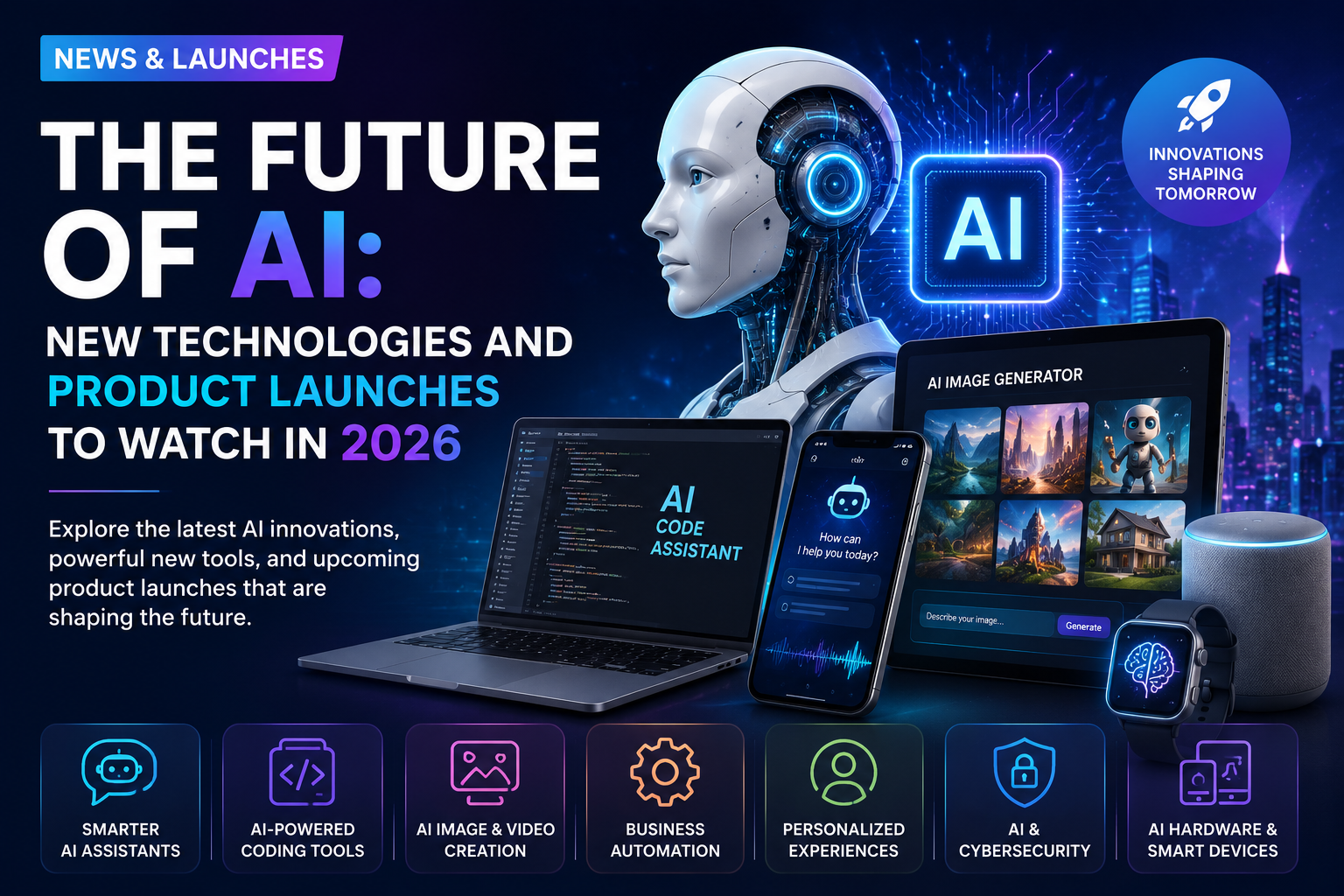
The Future of AI: New Technologies and Product Launches to Watch in 2026
1. Smarter AI Assistants
AI assistants are becoming more capable of handling complex tasks instead of simply answering questions.
Modern AI assistants can help users research information, write content, organize ideas, analyze data, generate code, and complete multi-step workflows.
The goal is moving from simple conversations toward AI systems that can actually assist with complete tasks.
2. AI-Powered Coding Tools
One of the biggest areas of growth is AI-assisted software development.
New coding tools can help developers generate code, understand existing projects, identify bugs, and improve applications.
These tools are especially useful for repetitive development tasks, allowing developers to spend more time on architecture, creativity, and problem-solving.
3. New AI Image and Video Tools
AI-generated visual content continues to improve.
New image and video technologies are helping creators produce:
- Marketing graphics
- Product visuals
- Social media content
- Presentations
- Short videos
- Concept designs
This makes professional-looking visual content more accessible to small businesses and individual creators.
4. AI Features Coming to Everyday Software
AI is increasingly being added directly into the software people already use.
Instead of opening a separate AI application, users can find AI-powered features inside productivity tools, design applications, communication platforms, and business software.
This makes AI easier to use because it becomes part of existing workflows.
5. AI for Business Automation
Businesses are adopting AI to automate repetitive tasks such as customer support, data processing, document management, email assistance, and reporting.
Automation can help companies reduce manual work and allow employees to focus on tasks that require creativity and human decision-making.
6. More Personalized Digital Experiences
Another important development is personalization.
AI can analyze user preferences and behavior to help websites and applications provide more relevant recommendations and content.
For example, online stores can recommend products, while content platforms can suggest articles or videos based on user interests.
7. AI and Cybersecurity
As technology becomes more advanced, cybersecurity is also becoming increasingly important.
AI can help security teams detect unusual activity, identify potential threats, and analyze large amounts of security data.
At the same time, businesses need to understand that AI can also introduce new security and privacy challenges.
8. AI Hardware and Smart Devices
AI is no longer limited to computers and cloud applications.
New devices are being designed with AI capabilities that can process information, understand commands, and provide intelligent assistance.
AI-powered smartphones, computers, wearable devices, and other smart technologies could make AI a more natural part of everyday life.
9. What These Launches Mean for Users
The growth of AI products gives users more choices than ever before.
However, choosing the right technology is important. A new product may have impressive features, but that does not necessarily mean it is the right solution for everyone.
Before adopting a new AI tool or product, consider:
- What problem does it solve?
- Is it easy to use?
- Does it integrate with existing tools?
- What are the costs?
- How is user data handled?
- Is it reliable for important tasks?
10. The Importance of Responsible AI
As new AI products continue to launch, responsible use of technology remains important.
Users should verify important information, avoid sharing sensitive data unnecessarily, and understand how AI-generated content is being used.
Human judgment will continue to be important even as AI systems become more capable.
What’s Next for AI?
The AI industry is moving toward tools that are faster, more personalized, and more integrated into everyday software.
Instead of using AI only as a separate tool, people will increasingly interact with AI directly through the applications and devices they already use.
This could change how we work, learn, create, communicate, and manage businesses.
Final Thoughts
2026 is shaping up to be an important year for AI innovation. New assistants, coding tools, creative applications, automation platforms, and smart devices are changing what is possible with technology.
For users and businesses, the key is not to adopt every new launch but to identify the technologies that provide real value.
As new products continue to arrive, staying informed can help you understand which innovations are worth exploring and how they can improve your digital workflow.